
Breaking Cells: Understanding the School-to-Prison Pipeline
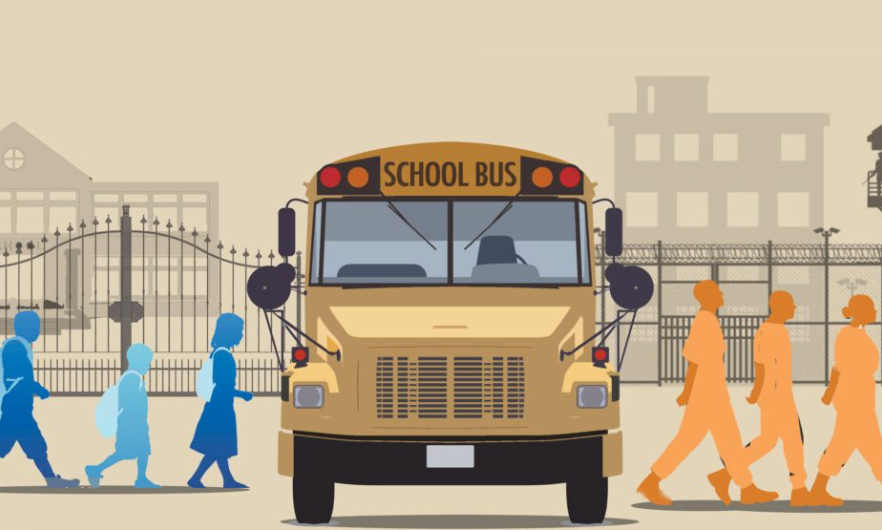
Photo Credit: closeup.org
This keynote, led by Dr. Bryant Best (Morgan State University) and SOURCE community-based organizations (CBOs) as panelists, will explore the school-to-prison pipeline as a public health, educational, and racial justice crisis. Rooted in the lived realities of Baltimore youth, the session will examine how discipline practices, systemic racism, and structural disinvestment fuel cycles of incarceration and inequity. Panelists will also highlight community-centered interventions and opportunities for collaboration across health, education, and advocacy sectors.
- Objectives:
- Define the school-to-prison pipeline and its intersecting systems (education, policing, juvenile justice, housing).
- Analyze how the pipeline manifests in Baltimore, with historical and present-day examples.
- Recognize the health impacts of criminalizing Black and Brown youth, including trauma, chronic stress, and barriers to care.
- Identify ways health professionals can intervene through trauma-informed care, policy advocacy, and community engagement.
About the Speakers
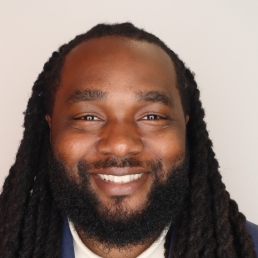
Dr. Bryant Best
Keynote Speaker
Bryant O. Best, Ph.D., is an educator and researcher committed to advancing equity in education. He holds a Ph.D. in Justice & Diversity in Education from Vanderbilt University, an M.A. in Sociology with a specialization in Race, Class, and Gender from the University of Maryland, College Park, and a B.A. in African American Studies and Psychology from the University of North Carolina at Chapel Hill. His career has included policy research and strategy roles with the American Council on Education and the Council of Chief State School Officers, where he focused on educational equity, socioemotional learning, and competency-based education. Dr. Best’s research explores the school-to-prison pipeline, Black students’ engagement with STEM through video game culture, and the use of hip-hop as a space for healing in urban communities. His work has been published in journals such as Race, Ethnicity, and Education, the Journal of Emotional and Behavioral Disorders, and Language Arts.
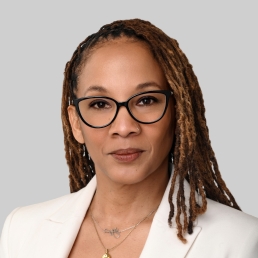
Alexandria Adams
Elev8 Baltimore
Alexandria currently serves as the Chief Executive Officer of Elev8 Baltimore, bringing more than 18 years of nonprofit leadership experience. She has played a pivotal role in advancing education and youth development initiatives across the city. Under her leadership, Elev8 Baltimore successfully transitioned into an independent nonprofit organization, broadening its reach and deepening its impact on the community.
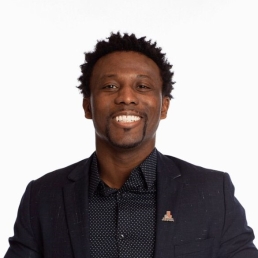
Dr. Stanley Andrisse
From Prison Cells to PhD (P2P)
Dr. Stanley Andrisse, MBA, PhD, is an endocrinologist scientist and Assistant Professor at Howard University College of Medicine, specializing in type 2 diabetes and insulin resistance research. He also serves as a visiting faculty member at Georgetown University Medical Center and has held academic positions at Imperial College London and Johns Hopkins Medicine.
Beyond his scientific expertise, Dr. Andrisse is a nationally recognized advocate for criminal justice reform and educational access. He is the Executive Director and Founder of From Prison Cells to PhD (P2P), a nonprofit dedicated to empowering formerly incarcerated individuals through education and mentorship.
His personal journey—from being sentenced to a maximum-security prison to earning a PhD and MBA—has inspired thousands, making him a sought-after keynote speaker at universities, government institutions, and corporate events.
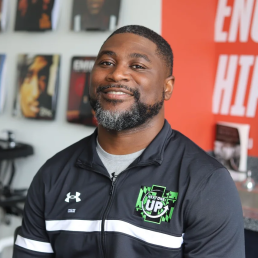
Shel Simon
Next One Up
Shel Simon was born and raised in West Baltimore and is a proud graduate of St. Paul’s School for Boys and the University of Maryland. With a deep commitment to youth development and community empowerment, he has dedicated over a decade to coaching youth football in Baltimore City, shaping the lives of countless young athletes.
For the past 10 years, Shel has been an integral part of Next One Up, serving in key leadership roles including Deputy CEO, Program Director, and currently Senior Program Director. Through his leadership, he works to expand opportunities and provide mentorship for young men in Baltimore, helping them unlock their full potential both on and off the field.
Key Takeaways
Event Summary
Presented by: Dr. Bryant O. Best, Assistant Professor of Urban Educational Leadership, Morgan State University
Hosted by: JHU SOURCE | Social Justice Series
Date: October 1, 2025
What is it?
A set of policies, practices, and beliefs that push students, disproportionately those from historically marginalized groups, out of classrooms and toward criminal-legal systems. Impact extends to peers in high-suspension schools (lower math achievement and college attendance).
Who is most affected?
- Black and Latino students (incl. English learners), students with disabilities, LGBTQIA+ students, students from low-income backgrounds, and those in schools serving mostly students of color.
Contributing factors (evidence-based)
- Anti-Black/culturally biased school policies; educator beliefs/practices; institutional & individual racism; under-preparation in teacher education.
- Disparities are driven more by adult behavior and mindsets (teachers/principals) than by student “misbehavior” or poverty.
What it looks like in schools
- Students of color disciplined for subjective infractions (“disrespect”) vs. White peers for objective ones (tardiness).
- Zero-tolerance, metal detectors, and SRO expansion despite weak evidence of effectiveness.
- Federal “dismantling” dollars often diverted away from community solutions.
From the panel (CBO insights & lived experience)
Drawn from the session recording captured (lightly edited for clarity):
- Terminology matters: School-to-Prison Pipeline (educational shortcomings), School-to-Prison Nexus (school ecology), Cradle-to-Prison Pipeline (early onset).
- How early? Yale Child Study Center (2016) experiment shows preschool teachers—without any misbehavior present—watched Black boys longer, surfacing implicit bias as early as pre-K.
- Policies & culture: Examples included hair-based discipline (TX case of Darryl/Darryl George) and rules policing Black girls’ aesthetics (Jamaica example), showing anti-Black policies even in Black-majority spaces.
- It’s not just “student behavior”: Meta-analysis (Welsh & Little, 2018) echoed by Dr. Best—administrator beliefs, local norms, and fear of litigation shape who is removed and who is “dealt with.”
- Relationships over metrics:
- Next One Up centers buy-in, love, and empathy; youth attendance and peer-to-peer recruiting signal psychological safety.
- From Prison Cells to PhD stresses authentic, directly impacted leadership; navigating corrections requires language change (e.g., “incarcerated individuals” vs. stigmatizing labels) and power-aware partnerships.
- Elev8 Baltimore builds culturally relevant literacy (Freedom School model; Baltimore authors/stories) and service-learning, naming how current politics constrain liberatory language while communities still need it.
- Funding tensions: Philanthropy often demands outputs over relationships; community orgs navigate data needs without losing the human core.
- Personal charge to attendees: Talk about STPP in private spaces (families, neighbors). Lead with love and empathy in every youth interaction. Seek/offer access and opportunity; talent is evenly distributed; access isn’t.
Actionable Steps (for campuses & partners)
- Audit discipline data for subjectivity (e.g., “defiance”) and disparate impact; replace exclusion with restorative responses.
- Train adults, not “fix kids”: Bias interruption, culturally sustaining pedagogy, trauma-responsive practice, and administrator mindset work.
- Reduce carceral presence: Re-evaluate SRO/metal detector policies; invest in relationship-rich support.
- Resource community partners: Fund directly impacted leadership, stipends for youth/parents, and co-created curricula (literacy + service).
- Language shift: Use people-first, non-deficit terms; interrupt deficit talk in private/team spaces.
- Keep the conversation going: Bring STPP into staff rooms, board meetings, classrooms, and family circles.
Learn more & stay connected
Connect with Dr. Bryant Best
- LinkedIn: linkedin.com/in/bryantobest
- Twitter/X & Instagram: @educator_x
- Email: [email protected]
Connect with our CBOs